
Agentic AI Won’t Work Without This: The Companies That Win with Agentic AI
Last week in Orlando, I had one of those “this is why we do what we do” moments.
DataDriven brought together more than 500 people over three packed days. Customers. Partners. Data and IT leaders. Business leaders who may not live and breathe data every day, but who feel the impact of it in every decision they make. And while the sessions ranged across industries and use cases, the conversations kept circling back to the same theme that’s now sitting on top of everyone’s priority list:
How do we create the context our organizations need to unlock agentic AI, so we can survive and thrive in what’s coming next?
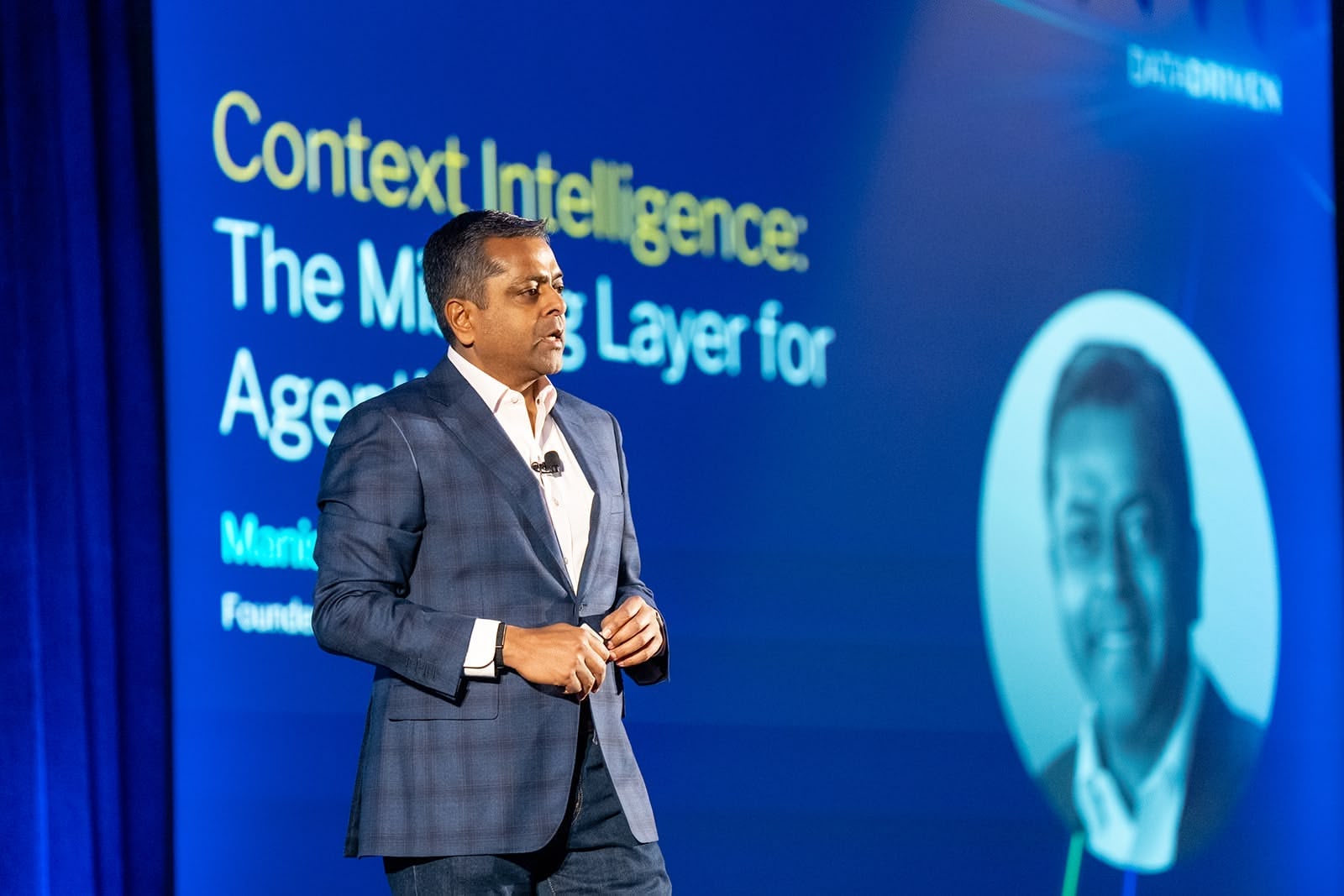
Not “How do we try a chatbot?” Not “How do we automate a few tasks?” But something deeper: how do we build an environment where AI agents can act with confidence, where they can reason over the same reality your teams use to run the business, and where they can do real work without creating new risk?
Because agentic AI doesn’t fail in interesting ways. It fails in boring ways: wrong customer details, outdated product information, misread intent, inconsistent policies, missing approvals. In other words, it fails when context is fragmented, stale, or untrusted.
That’s why the most interesting conversations I had in Orlando weren’t about models. They were about operating models. About governance that doesn’t slow innovation. About creating institutional memory. About getting humans and agents to “see” the same truth and move in the same direction.
At Reltio, we’re tackling this challenge internally the same way we help our customers tackle it externally: by treating verified context as a first-class asset, and by building workflows that can turn that context into action.
The “Reltio Brain”: Context In, Action Out
Inside Reltio, we think about this as a context intelligence operating model.
At the center is an Enterprise AI Hub that powers our internal agent flow. You can think of it as the “Reltio brain”: a shared place where we connect and govern the information our teams rely on, and where we orchestrate the agentic workflows that sit on top of it.
From that hub, two things move constantly across the company:
- Verified Context (Fuel): trusted, curated, governed information that’s fit to be used by both people and agents
- Agentic Workflows (Engine): the repeatable processes that take that context and turn it into outcomes
This isn’t theoretical. It’s designed to serve real work across the business:
- GTM (Sales + Marketing): giving teams (and agents) consistent, accurate knowledge and the ability to act on it quickly
- Customer Success + Support: surfacing signals earlier, prioritizing the right interventions, and reducing the scramble when risk shows up
- R&D (Product + Engineering): tightening feedback loops so we build with clearer customer context and ship with fewer surprises
- G&A (Finance + Legal): applying policy and control in ways that are scalable, auditable, and still fast enough for the business.
Centralized Strategy, Federated Execution
One thing we’ve learned: you can’t “central team” your way into enterprise-wide AI adoption. But you also can’t let every group build their own agents on their own context and hope it all works out.
So we operate with a centralized strategy and federated execution.
We have a central AI team (an AI Hub / Center of Excellence) that sets the strategy, standards, governance, and reusable building blocks. Then, within each function, we embed AI business partners who do the practical work: owning use cases, prioritizing what matters, driving adoption and process change, and measuring real KPI impact.
That structure keeps us honest. It forces us to answer the only question that matters: what outcome are we driving?
A few examples of targeted outcomes we’re building toward:
- An onboarding and enablement coach for Sales that accelerates time-to-productivity
- A “Reltio Voice” / Narrative OS (our GTM Genie) that serves as institutional memory for messaging and marketing intelligence
- A customer health and renewal risk capability that detects churn signals early and drives proactive intervention
- “Reltio on Reltio” work: building an enterprise AI system grounded in layered context, so our own teams can move faster with confidence
The Takeaway from Orlando
If there was one big lesson from DataDriven, it’s this: agentic AI is going to separate organizations that experiment from organizations that operate. The winners will be the ones who invest in context as infrastructure, not as an afterthought.
That’s what this newsletter is about. What we’re hearing from the market. What we’re building. And what it really takes to turn agentic AI from an exciting demo into a durable advantage.
The Readiness Gap: Ambition Is High. Context Is Not.
If Orlando felt like a turning point, new research suggests we’re also at a reality check.
A recent Harvard Business Review Analytic Services pulse survey, sponsored by Reltio, surveyed 325 global business and technology leaders. The headline number is striking: 94% of organizations are exploring or implementing AI. But only 15% consider their data foundation “very ready” for the shift toward agentic AI.
That gap is where risk lives.
Nearly every leader surveyed ranked trust in data as critical to AI success. Yet fewer than four in ten believe their organizations are highly proficient at ensuring that trust.
When AI agents are empowered to resolve customer disputes, adjust supply chain orders, or manage financial decisions autonomously, fragmented or stale data does not create small mistakes. It creates scaled mistakes.
The report identifies three consistent barriers:
- Persistent data silos. Nearly half of respondents cite silos as the top obstacle.
- Strategic misalignment. Only a small minority say their data investments are tightly aligned with business strategy.
- Governance gaps. Governance must move from compliance exercise to real-time discipline.
The throughline is context. Agentic AI does not run on raw data alone. It runs on unified, governed, real-time context that defines how customers, products, suppliers, and policies relate to one another across the enterprise.
Without that shared semantic layer, even the most advanced models are guessing.
If you want to explore the full findings and see how your peers are navigating the shift from experimentation to operational AI, download the complete HBR Analytic Services report.
Industry Focus: Direct-to-Patient Is Accelerating, but Can the Data Stack Keep Up?
One of the most interesting shifts I’m watching right now is pharmaceutical companies moving from “testing” direct-to-consumer programs to treating them as a real go-to-market strategy. The promise is simple: fewer intermediaries, more pricing transparency, and a better patient experience.
But what’s happening under the surface matters more. Going direct isn’t just a channel change. It’s a responsibility change, and especially a data accountability change.
When manufacturers sell directly to patients, they inherit the full end-to-end relationship. That means managing patient identity, consent and communication preferences, fulfillment and logistics, support interactions, adherence monitoring, and ongoing engagement.
Retail pharmacies and major retailers built the operational and data muscle for this over decades. Most pharma companies didn’t need to, because the data stayed downstream.
Direct-to-consumer flips the model. Now manufacturers have to operate like retailers, but under far stricter privacy, safety, and regulatory requirements. And legacy pharma data stacks often weren’t designed for the high-frequency questions DTC creates: Is this the same patient across email, web, and call center? Did we honor an opt-out across every system? Do we have the right identity and address for fulfillment? Are we seeing adherence risk early enough to intervene?
In healthcare, the cost of bad data is not inconvenience. It’s privacy violations, regulatory penalties, and potentially unsafe outcomes. The companies that win in DTC will treat unified patient context and governance as a strategic prerequisite, not a back-office project. Check out our Life Sciences website to learn more.