What’s Your AI Equation?
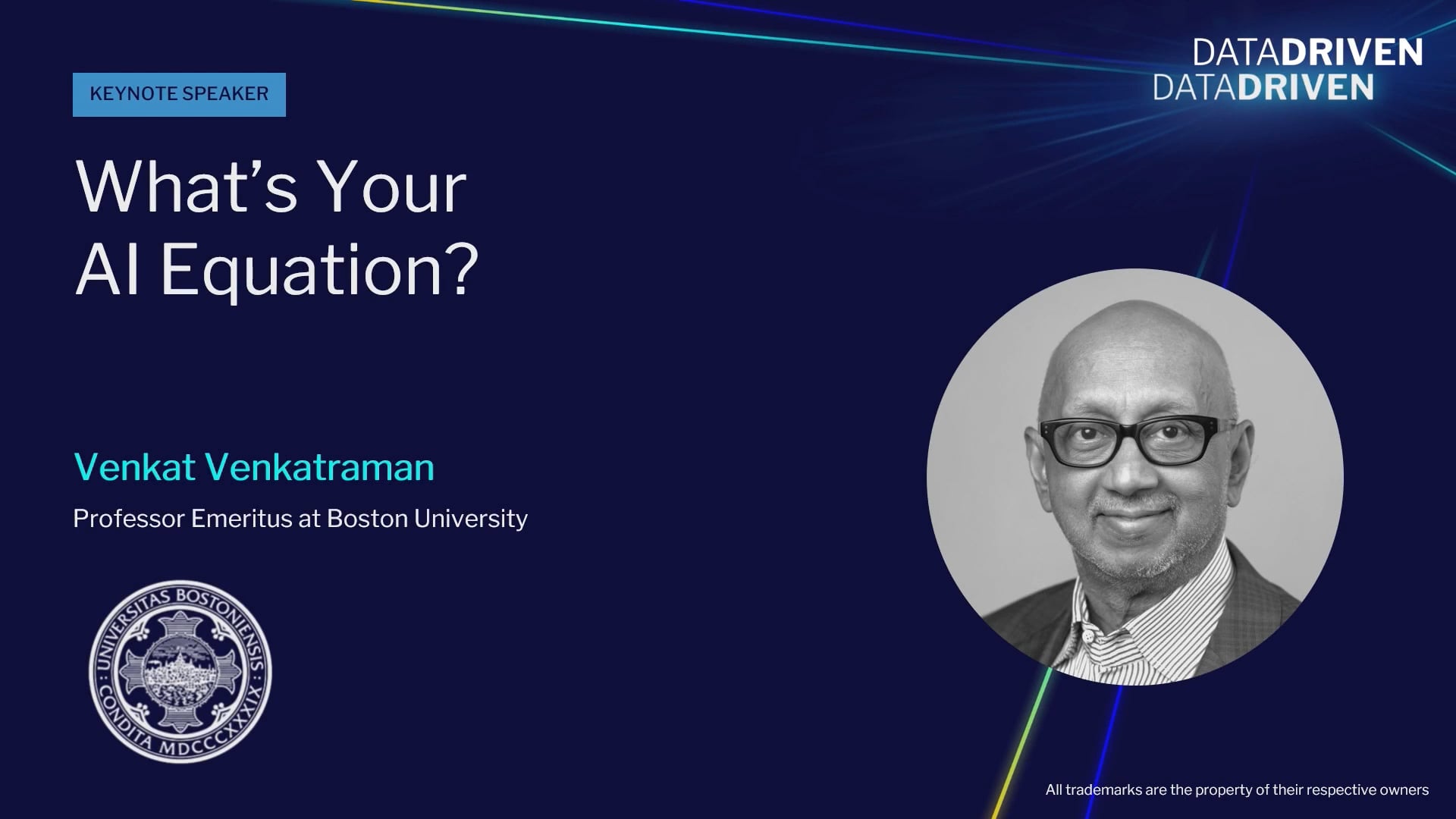
Most organizations talk about AI as if it were a single ability. In reality, every company—and every individual—operates with an AI equation that shapes how humans and machines collaborate to generate value.
Professor Venkat Venkatraman of Boston University’s Questrom School of Business introduces three equations that define the strategic choices leaders must make. The first is addition (H + M), where humans are assisted by machines to work faster and more efficiently. The second is multiplication (H × M), where AI is embedded into workflows, decisions, and operations—scaling expertise rather than just automating tasks. The third is exponential (H^M), where humans and machines learn together over time, creating compounding advantage through continuous feedback and delegated action.
The central argument is that most organizations mistake AI for artificial intelligence—something that thinks for us. The real challenge is agentic intelligence: deciding when, where, and how humans and machines should act together, with shared context, trusted data, and appropriate governance.
These three equations do not depict a linear progression of AI development; instead, Venkat will emphasize why leaders need to actively balance all three equations at the individual, team, and organizational levels. Agentic intelligence provides the framework for understanding how strategy changes when expertise becomes the key to competitive advantage, and actions must move at the speed of data.