
DATADRIVEN
February 23-25, 2026
Orlando, FL
See featured sessions from DataDriven2026
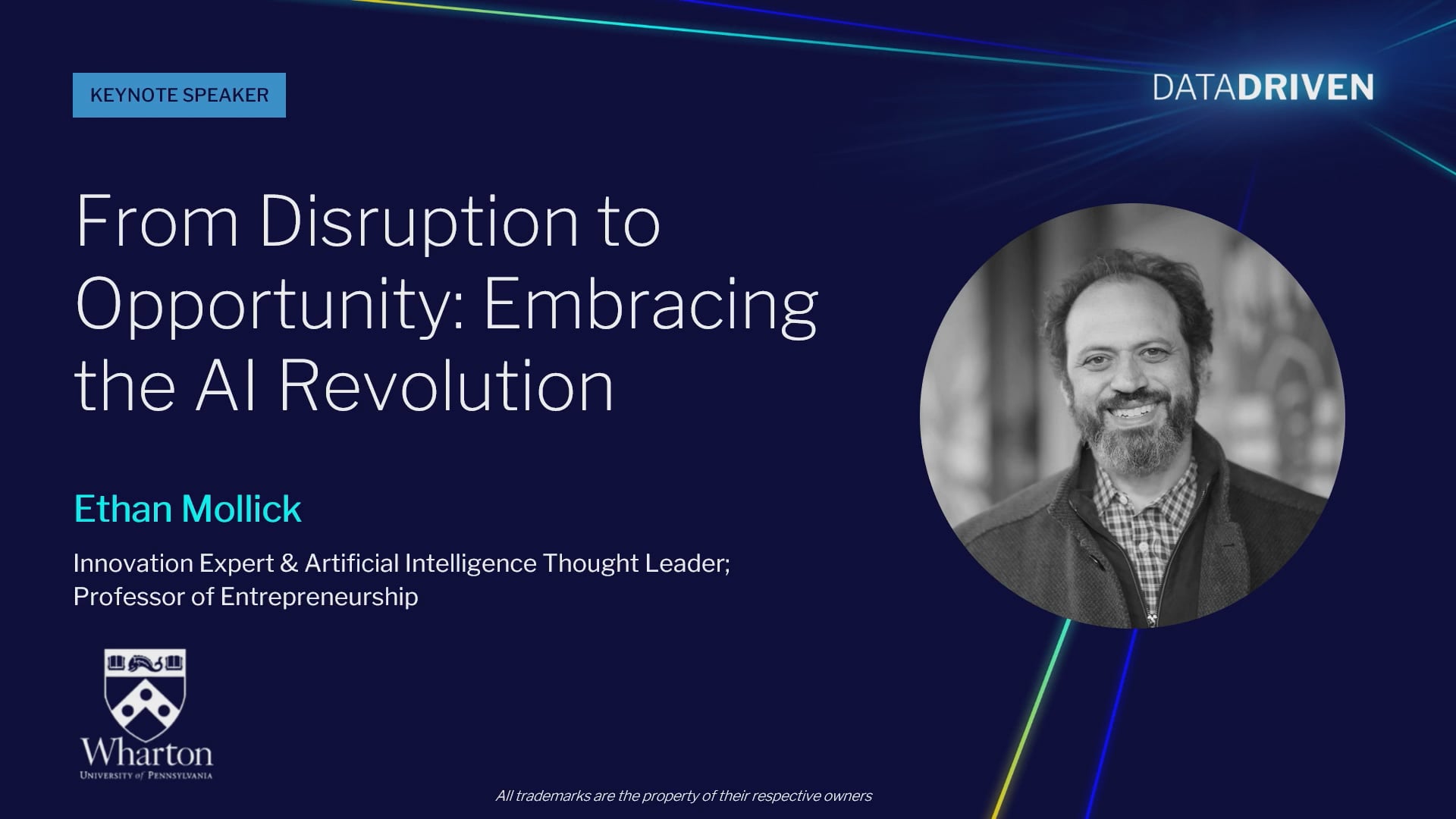
From Disruption to Opportunity: Embracing the AI Revolution
In this thought-provoking speech, join Wharton Professor Ethan Mollick as he dives into the highly discussed, transformative realm of AI. Discover how AI, including chatbot technologies like ChatGPT, has disrupted our work and our entire way of life, leaving an indelible mark on society. Rather than fight the current we’re already in, Ethan shifts the conversation towards a more pivotal question: How can we thoughtfully and consciously embrace AI to propel innovation and shape our future?
With dynamic and interactive elements integrated into his speech, Ethan sparks curiosity. He takes audiences on an exploration of the boundless opportunities and incredible possibilities in this era of AI revolution.
Context Intelligence: The Missing Layer for Agentic AI
Enterprises have spent billions on AI, yet too many deployments still break on the same problem: models operate disconnected from the messy reality of enterprise data, producing low trust, higher risk, and inconsistent outcomes.
In this keynote, Manish Sood, Founder and CEO of Reltio, argues that agentic AI will scale only when organizations build a System of Context: a Context Intelligence layer that makes business context machine-interpretable by unifying the entities, relationships, rules, and meaning that AI requires for multi-hop reasoning.
He outlines why agents can answer simple questions but stumble on real business questions that demand semantics, rules, and context across time and across the organization. Manish will also share customer examples from global leaders in quick-service retail and life sciences that are already using Context Intelligence today to make AI more reliable and actionable.
You’ll learn what’s required to unlock Context Intelligence and how this missing abstraction layer helps deliver explainable, governed AI while accelerating ROI.
What’s Your AI Equation?
Most organizations talk about AI as if it were a single ability. In reality, every company—and every individual—operates with an AI equation that shapes how humans and machines collaborate to generate value.
Professor Venkat Venkatraman of Boston University’s Questrom School of Business introduces three equations that define the strategic choices leaders must make. The first is addition (H + M), where humans are assisted by machines to work faster and more efficiently. The second is multiplication (H × M), where AI is embedded into workflows, decisions, and operations—scaling expertise rather than just automating tasks. The third is exponential (H^M), where humans and machines learn together over time, creating compounding advantage through continuous feedback and delegated action.
The central argument is that most organizations mistake AI for artificial intelligence—something that thinks for us. The real challenge is agentic intelligence: deciding when, where, and how humans and machines should act together, with shared context, trusted data, and appropriate governance.
These three equations do not depict a linear progression of AI development; instead, Venkat will emphasize why leaders need to actively balance all three equations at the individual, team, and organizational levels. Agentic intelligence provides the framework for understanding how strategy changes when expertise becomes the key to competitive advantage, and actions must move at the speed of data.
Trust Is the New Infrastructure — From Retail Shelves to Runways
Autonomous systems are moving from concept to reality: same-day fulfillment, automated replenishment, dynamic pricing, predictive maintenance, fleet optimization. Whether you’re moving dog food or jet engines, Aarti Bajaj, Executive Director, Data Strategy, at Boeing, argues it all depends on one thing above all else: trustworthy data.
Drawing on a hard-earned lesson from a sudden industry upheaval that made her accountable for reporting, lineage, and controls overnight, Aarti shows why trust is the real failure point in modern systems: when data fails, trust erodes, and systems break. She connects retail and aerospace to explain two shifts reshaping the data mandate—from reporting to prediction and from compliance to confidence—and why “data as an asset” is mostly a myth, even as leaders still ask, “Which number do I trust?”
AI makes the stakes non-negotiable. Bad data at human speed causes delays. Bad data at machine speed can cause disasters. The next generation of leaders won’t ask how much data you have — they’ll ask which decisions you can safely automate, and why. Trust is the infrastructure. CDOs are the builders.
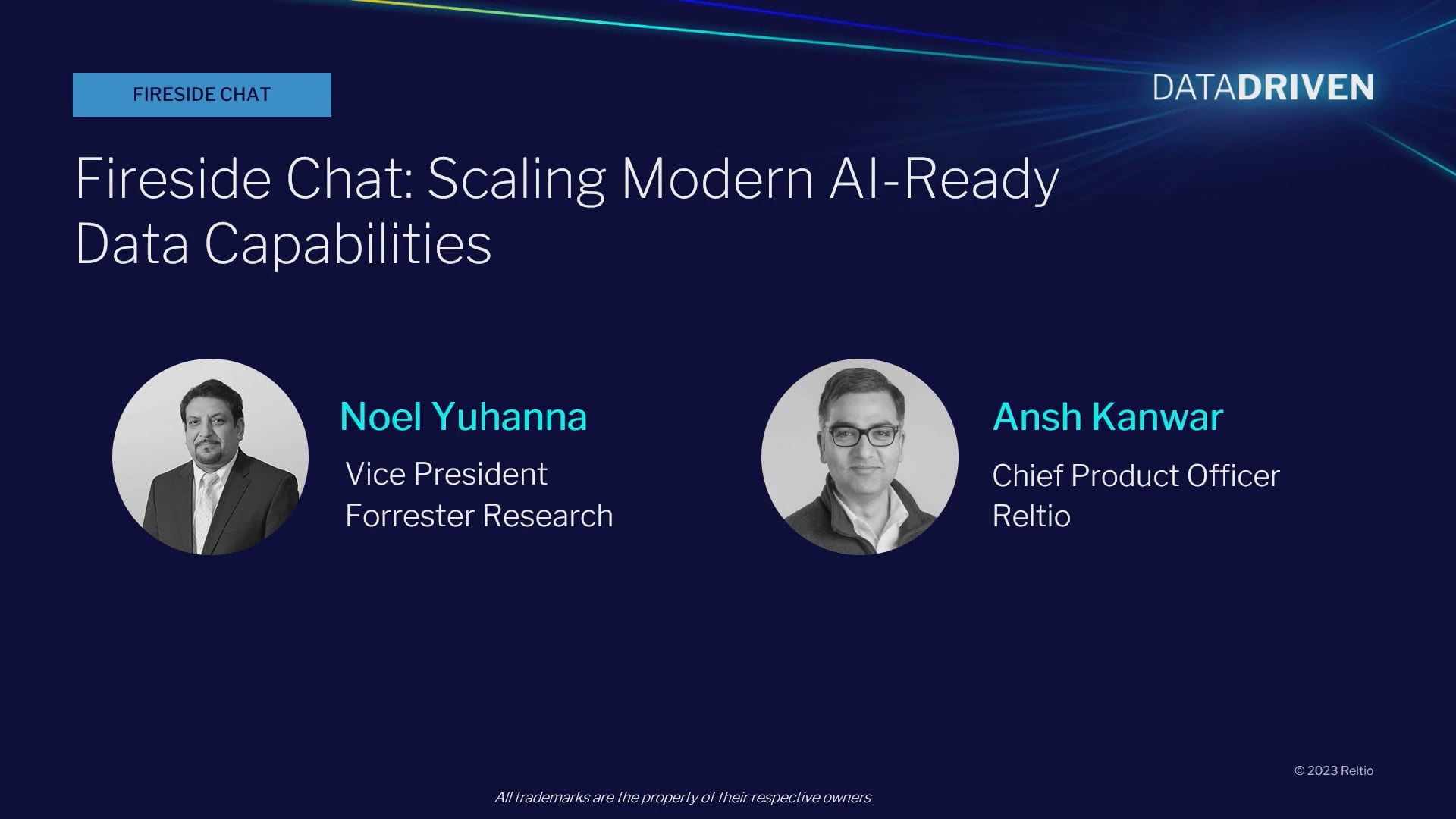
Fireside Chat: Scaling Modern AI-Ready Data Capabilities
Forrester Research Vice President Noel Yuhanna and Reltio Chief Product Officer Ansh Kanwar discuss the evolution of data management and the central role of trusted context in the Age of intelligence.
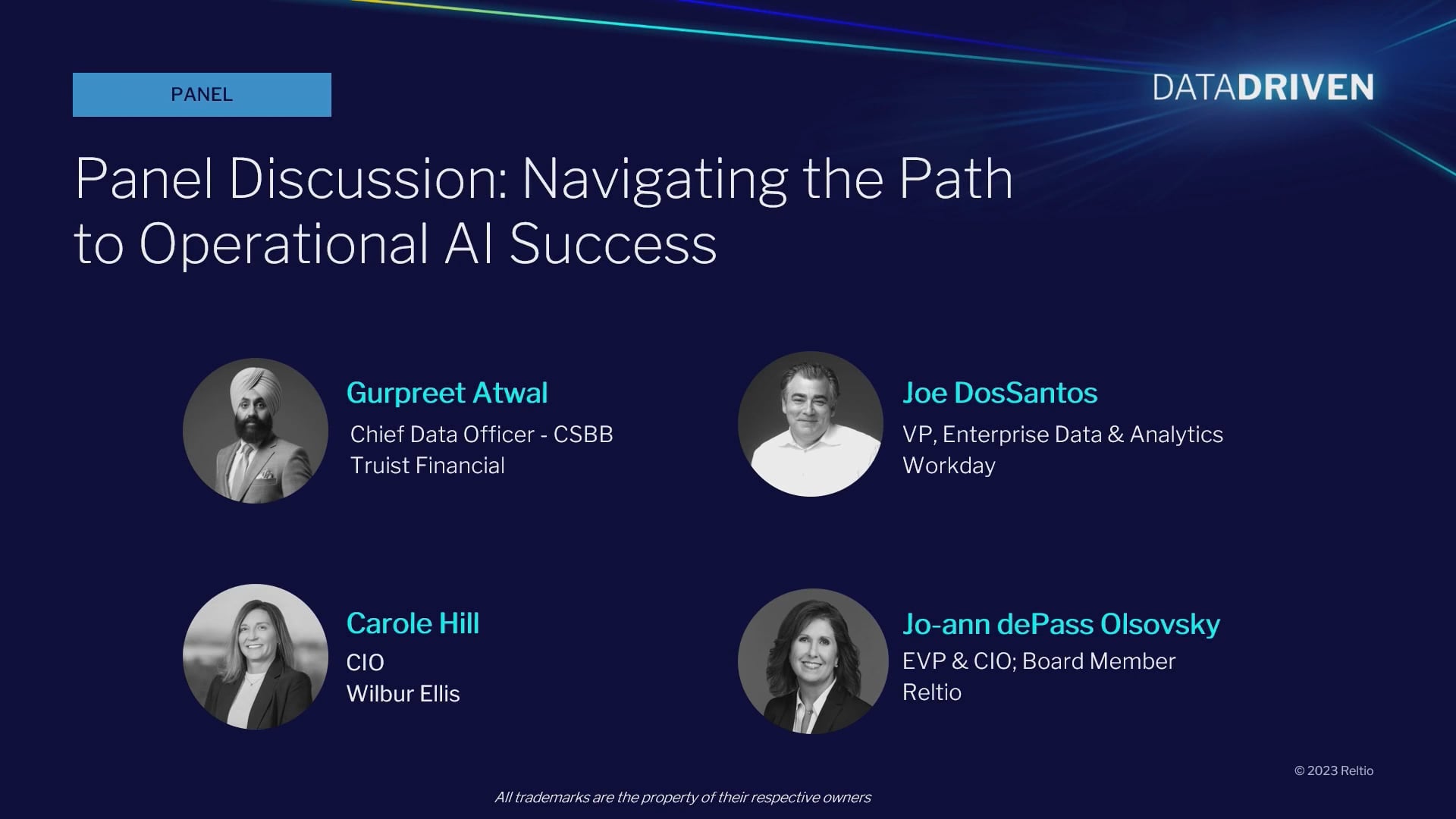
Panel Discussion: Navigating the Path to Operational AI Success
Panel discussion featuring Gurpreet Atwal, CDO – Consumer and Small Business Bank at Truist Bank; Joe DosSantos, VP Enterprise Data and Analytics at Workday; Carol Hill, CIO at Wilbur Ellis and moderated by Jo-Ann dePass Olsovsky, Reltio Board Member and former CIO and Executive Vice President at Salesforce.
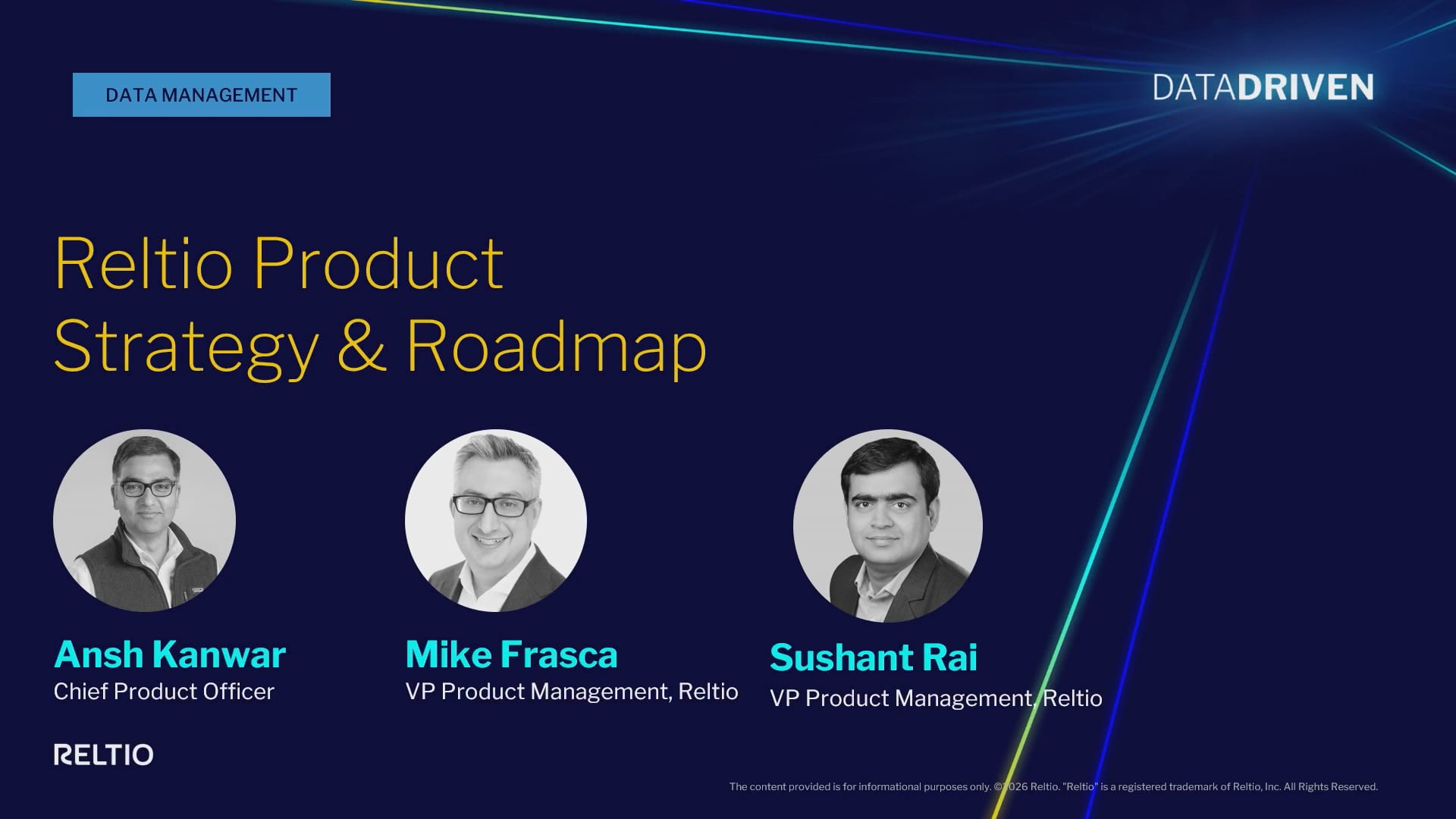
Reltio's Product Roadmap
Join Reltio Product Management Vice Presidents Sushant Rai and Mike Frasca for an action-packed session on Reltio’s product roadmap. In this session, you’ll discover key investment areas for 2026, explore new offerings, and learn about best-in-class technology partnerships driving industry-leading innovation.
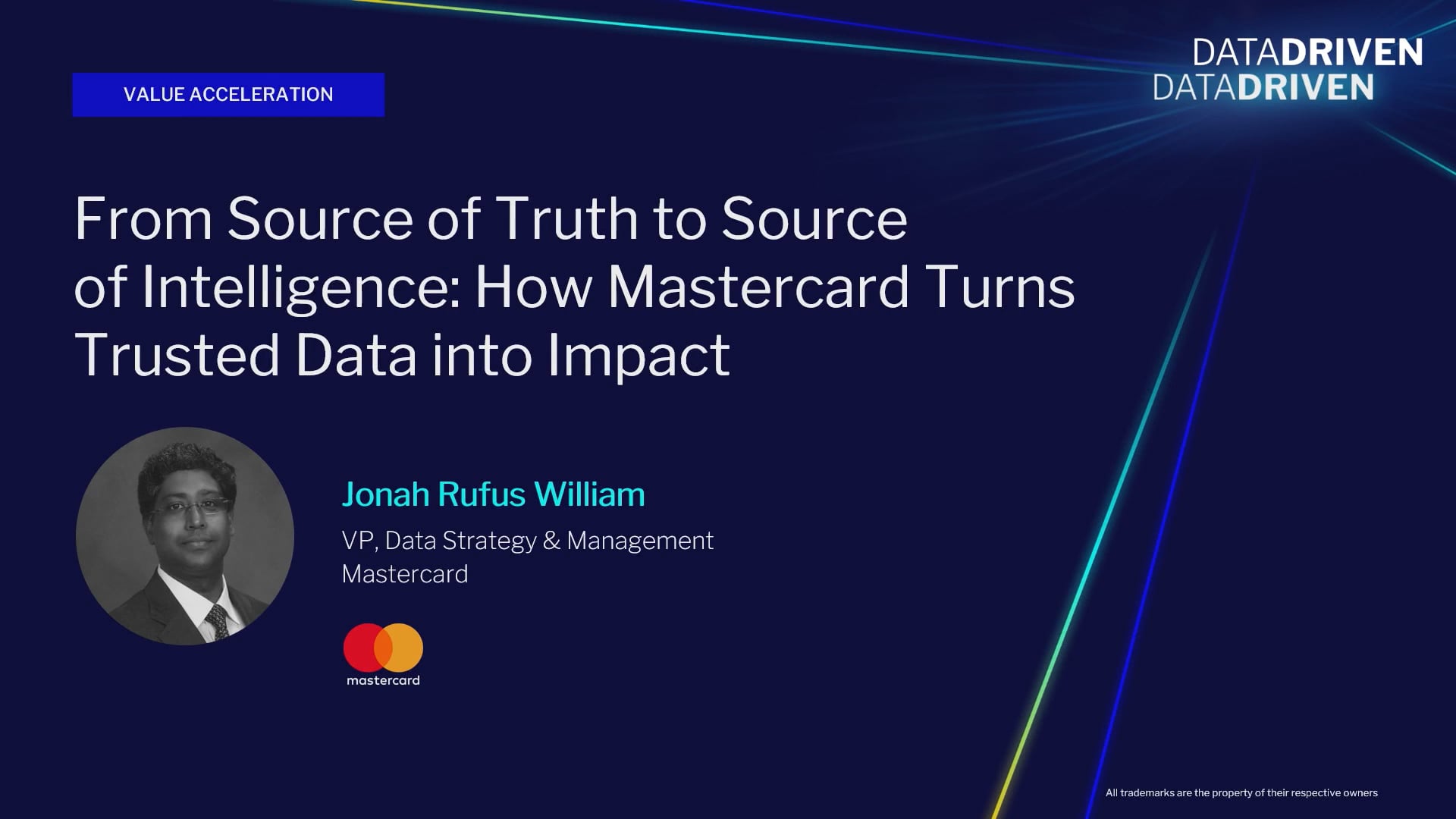
From Source of Truth to Source of Intelligence: How Mastercard Turns Trusted Data into Impact
Mastercard is at a pivotal moment in its data unification journey, shifting from maintaining accurate records to activating trusted intelligence at global scale. In this session, Rufus William, VP, Data Strategy & Management at Mastercard, shares how the organization is unifying fragmented data across products, operations, and third-party sources to overcome legacy challenges and enable trusted insights. This transformation is reshaping how data supports enterprise strategy—driving faster decision-making, deeper customer understanding, and sustainable business value.
Building Intelligent Hospitality: How Radisson Turns Trusted Data into AI Impact
Radisson Hotel Group struggled with fragmented data across brands and properties, limiting its ability to optimize pricing, personalize guest experiences, and support hotel operations. In this session, Nouman Ali, Senior Director of Global Data Governance and MDM, shares how Radisson unified guest and operational data and translated it into real business impact. He’ll discuss how the company prioritizes AI use cases based on guest and revenue value, aligns trusted data with its AI roadmap, and experiments responsibly with agentic AI.
From BI to AI at Workday: How Enterprise AI Success Hinges on Semantics
Enterprises are racing to deploy AI, but many are discovering that trusted BI foundations are necessary—and no longer sufficient. In this session, Joe DosSantos, Vice President of Enterprise Data and Analytics, shares why AI fails when facts, metrics, and context are inconsistently defined, and why semantics has become an operational requirement, not a governance afterthought. Drawing on Workday’s experience modernizing analytics consumption, learn how semantic alignment improves decision speed, reduces BI bottlenecks, and enables reliable agent-based experiences.
Transforming Pfizer’s Clinical Operations with Agentic AI Capabilities
Pharmaceutical organizations often manage clinical and enterprise data in separate systems, impacting the velocity of clinical trial operations and time to market for new innovative therapies. In this session, Nishith Trivedi, Enterprise Data Governance and Global MDM Lead, shares how Pfizer is connecting clinical and commercial MDMs and applying agentic AI with human oversight to accelerate clinical trial operations. Learn more about how Pfizer is scaling agentic capabiltiies on a global scale with an AI framework, and agent governance.
AstraZeneca’s Perspective on Why AI Value Depends on Reliable, Governed Data
AI can shorten development and commercialization timelines by 20–40%, but only when data is reliable, governed, and fit for purpose. This session shares AstraZeneca’s perspective on why data quality is the real bottleneck to AI value, with insights from Victor Kim, R&D Reference and Master Data Director. Using real risk and value scenarios, it shows how poor data quality, weak lineage, and unclear ownership amplify bias, regulatory exposure, and costly failures. Attendees will learn what “AI-ready data” means in practice—from trusted identifiers and shared data models to quality SLAs, privacy by design, and human-in-the-loop validation—and why leaders must fund the data foundation before scaling AI.
Syneos Health's Journey to Higher Data Quality with a Diagnostic Mindset
Syneos Health evolved its data management approach by shifting from an IT-led MDM initiative to a business-driven, diagnostic model focused on real operational needs. In this session, Lanett Grant, VP and Head of Data, M&A – Architecture and AI Governance, shares how a unified data view was used to diagnose root causes of data issues, distinguish true data quality problems from data that is simply disorganized, and align governance to business processes. Learn how delivering the right data per role helped build trust across the business and drove a 400% improvement in data integrity.
How Wilbur-Ellis Built a Trusted Data Foundation for Analytics and AI
Many organizations accelerate analytics and AI before establishing trusted data foundations. Wilbur-Ellis took an intentional approach, aligning customer, item, and operational data to support confident decision-making. In this session, Carole Hill, Chief Information Officer, shares how the agribusiness company prioritized key data domains, aligned KPIs to business outcomes, clarified data ownership, and strengthened governance and accessibility. Learn how to sequence data investments, manage change with lean teams, and scale analytics and AI by building data quality, accountability, and trust first.
Building the AI ready Data Foundation with Reltio Intelligent 360
Join this session, led by Director of Product Management Sriraj Rajaram, to learn about Reltio Intelligent 360, Reltio’s offering delivering real-time, trusted 360° view of data that fuels personalization, faster decisions, and agentic AI. Learn more about how enriching entities with relationships, interactions, and unstructured data accelerates time to agentic AI value and boosts CX and customer loyalty.
From Fragmented to Unified: Building Real-Time Customer 360 with Master Data Management and Intelligent Orchestration
Enterprise organizations struggle with customer data scattered across dozens of systems—CRM, ERP, marketing automation, support platforms, and data warehouses. While Master Data Management provides the golden record, the real challenge lies in keeping that data synchronized, enriched, and actionable across your entire technology ecosystem.This session explores how leading enterprises are combining Reltio’s multi-domain MDM capabilities with Workato’s intelligent data orchestration to create living, breathing Customer 360 platforms. We’ll demonstrate practical patterns for:
- Bi-directional sync patterns between transactional systems and your MDM golden record
- Event-driven data quality workflows that catch and resolve data conflicts before they propagate
- Intelligent data enrichment pipelines that augment customer profiles with third-party data, behavioral signals, and predictive insights
- Self-healing data architectures that automatically reconcile discrepancies across your ecosystem
Through real customer examples, we’ll show how this integrated approach reduces time-to-value from months to weeks, eliminates the “batch window” bottleneck, and gives business and data teams the confidence to put AI into production—using data they can actually trust.
MDM Re imagined: Agentic Governance for Context Rich Master Data at Scale
MDM is at an inflection point: the old centralized golden record model cannot keep up with product teams, real time decisioning, and constant change, so a next generation approach is needed that is federated by design and pushes data quality accountability to source system owners while preserving enterprise wide consistency for core identifiers, definitions, and controls.
We will be sharing our perspective on how API led integration, data enrichment at the point of entry, and dynamic data fabric patterns enable context driven data product creation at the speed of business, without sacrificing trust, lineage, or compliance.
We will also be sharing our perspective on how Model Driven Engineering (MDE) and MCP enabled agentic workflows can automate the hardest parts of MDM, including mapping, matching, exception handling, and governance execution, to reduce operational overhead while improving auditability and time to value. For MDM leaders, the focus is on pragmatic pathways to modernize without a complete replace, and on the operating model shifts required to make stewardship and governance scalable, measurable, and genuinely agile.
Scaling Personalized Hospitality: How Marriott Is Modernizing Data for a Global Experience Ecosystem
Marriott is undertaking a multi-year transformation to support rapid brand expansion, increasing operational complexity, and a global customer base of more than 400 million. This effort includes modernizing core reservation systems, rolling out a global Voice of Customer platform to 150,000 users, and deploying Reltio as the foundation for Account 360 and B2B data. In this session, Prashant Gaba, VP Global Data Strategy, Data Science & Activations, shares how Marriott is centralizing data, automating manual processes, and strengthening governance to improve frontline productivity and enable scalable personalization as the company evolves into a global experience ecosystem.
Modernizing Customer Data in Banking: Truist Bank’s Path from Legacy MDM to Customer 360
Banks face growing pressure to unify customer data while operating within legacy systems, regulatory constraints, and massive scale. Truist is modernizing a decades-old MDM environment by extending—not replacing—core systems to establish a trusted, analytics-driven Customer 360. This session explores the realities shaping Truist’s approach, the separation of operational MDM from growth-focused data unification, and how a unified view is laying the foundation for stronger identity resolution, personalization, fraud signals, and regulatory confidence.
From Data Unification to AI Readiness: Lennar’s Enterprise-Scale Journey
In this session, Lennar’s VP of Data and Analytics, Isaac Gabay, shares how the company is unifying enterprise data to support scale, governance, and AI readiness across modern homebuilding operations. He walks through Lennar’s data unification journey—from modernizing legacy systems and mastering core domains to establishing actionable governance and automation at scale. Isaac highlights measurable outcomes, including improvements in data quality, operational efficiency, and cross-domain visibility, and explains how trusted, governed data is enabling a pragmatic approach to AI. The session concludes with a look ahead at upcoming domains and how Lennar is laying the foundation for enterprise-grade, agent-enabled AI.
How Fusable Is Building an Enterprise Data Foundation to Power Agentic AI
As enterprises push toward Agentic AI and autonomous decision-making, most initiatives stall due to fragmented, inconsistent data foundations. Fusable faced this challenge across multiple brands, legacy systems, and domain-specific datasets that limited scale and trust. In this session, Matthew Cox, Chief Data Officer at Fusable, shares how the company rebuilt its data architecture to unify customer, organization, and asset data into a single, mastered foundation—combining MDM with proprietary industry intelligence to create business-ready, AI-consumable context that powers intelligent agents and revenue-driving use cases
How Aon is Turning Trusted Data into Measurable AI ImpactFoundation
Aon is advancing its global evolution by transforming fragmented data into a unified engine for scalable AI. Join Raju Debroy, Global Head of AI Engineering at Aon, as he reveals how a trusted data foundation is power-charging Aon’s 3×3 strategy. He will break down the “Ingest-Enhance-Activat” framework, the critical role of governance in establishing a “golden truth,’ and how early wins in operational efficiency are successfully anchoring AI initiatives to core business KPIs.
How Enterprises Are Using Acceldata and Reltio to Power the Next Era of Data Quality, Governance, and AI Readiness
As AI and analytics demands grow, enterprises need trusted, AI-ready master data. In this session, Ramon Chen, Acceldata CPO shares how Reltio and Acceldata’s Data Observability and Agentic Data Management work together to improve data quality, governance, and efficiency. Learn how observability, automation, and AI agents align data pipelines with business outcomes, reduce costs, and deliver measurable improvements for decision-making and innovation.
Agentic MDM as the Foundation for Next-Generation Data Products
Enterprises are shifting from traditional reporting toward AI-driven, operational data products that rely on high-quality, well-governed master data. Agentic MDM introduces AI-assisted capabilities—such as adaptive reference data alignment, explainable entity resolution, and predictive data quality—to overcome the limitations of rule-based, manual MDM programs. Join us to learn about practical examples of agent-assisted stewardship and governance that help organizations ensure their data products are decision-ready, scalable, and fit for autonomous workflows.